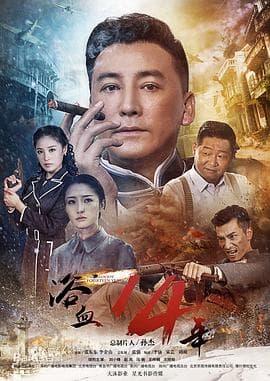
After the September 18th Incident, Shanghai medicinal materials merchant Xiang Qingsong privately organized a fundraiser to support the Northeast Anti-Japanese Volunteer Army. His son Xiang Binli also secretly participated in anti-Japanese activities without telling his father. After the 128th Incident broke out, Shanghai fell into chaos and the Xiang family suffered a catastrophe. Xiang Binli joined the Northeast Anti-Japanese Volunteer Army. Later, due to the surrender of his superiors, Xiang Binli defected to the Anti-Japanese Alliance led by the Communist Party. His superiors decided to let Xiang Binli return to Shanghai to establish underground transportation lines and provide supplies and medicines to the anti-Japanese armed forces. After the Battle of Songhu broke out, Xiang Binli joined the Second Detachment of the New Fourth Army, opened a base in central China, and carried out guerrilla warfare, referred to as the "Jiang Anti-Japanese Brigade". It attacked Xushuguan Station at night and wiped out the Japanese road protection team. The Shanghai Expeditionary Army Staff Department specially assigned Yamaguchi Kazuo to serve as the captain of the Wuxi Security Brigade to deal with Jiang Kang. After two years of hard fighting, the two sides fought on various fronts, winning and losing each other. In 1941, the Jiang Kang Brigade, which had experienced the Wannan Incident, returned to the base area in Central China. The New Fourth Army reorganized it and established an independent detachment in Central China. Xiang Binli was appointed as the detachment leader. In order to break the Japanese and puppet plans of "clearing the countryside" and "reclamation", they continued to fight against the enemy, and finally ushered in the victory of the Anti-Japanese War in 1945.
Public network detected during work hours. Use Tongbao VPN for stable access to ChatGPT / Claude / Notion / Slack — keep your cross-border workflow uninterrupted.
 0
0 0
0 0
0 0
0 0
0 0
0 0
0 0
0 0
0 0
0 0
0 0
0