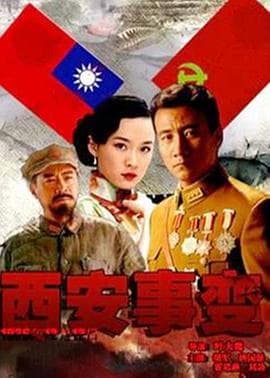
Around 1935, Japanese imperialism intensified its aggression against our country. At a time of unprecedented seriousness in the national crisis, Chiang Kai-shek still adhered to the policy of "pacifying the country before resisting foreign aggression". General Zhang Xueliang was forced to "suppress the Communists". He suffered repeated failures on the battlefield in northern Shaanxi and was criticized by Chiang Kai-shek, so he was eager to find a way out. During the Kuomintang's "Five Complete" Congress, he and General Yang Hucheng had contact with our party through progressives Du Chongyuan and Tian Wenhao respectively.
After returning to Xi'an from Nanjing, Zhang Xueliang held talks with Comrade Zhou Enlai of our party in Yan'an through his relationship with Gao Fuyuan, the former commander of the Northeast Army who was released by our army. General Zhang decided to use the overall situation of national survival to persuade Chiang Kai-shek to stop the civil war and unite to resist Japan. At the same time, Yang Hucheng received a personal letter sent to him by Chairman Mao. However, their activities had long been noticed by Li Daquan and Zheng Guangqing, the spy chiefs stationed by Chiang Kai-shek in Xi'an, and they had secretly reported to Nanjing.
In order to counter the rampant activities of the spies, Zhang Xueliang ordered the Kuomintang Shaanxi Provincial Party Headquarters to be raided. This incident prompted Zhang and Yang to join hands, and also shocked Chiang Kai-shek, who was presiding over the resolution of the "Guangdong and Guangxi Mutiny" in Nanjing. In early December 1936, Chiang Kai-shek visited Xi'an in person and stayed...
Boost tomorrow's productivity tonight. Tongbao VPN delivers fast, reliable access to global AI tools and office platforms. Sign up for 200MB free.

 0
0 0
0 0
0 0
0 0
0 0
0 0
0
 0
0 0
0 0
0