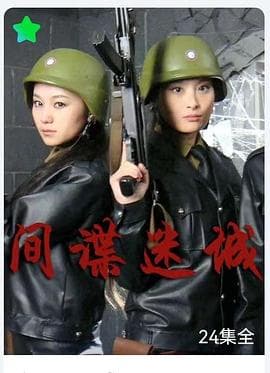
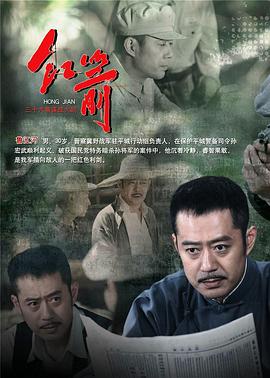
After the "Xi'an Incident", in order to establish a new united front to resist the Japanese invasion, Chiang Kai-shek gave up the suppression of the Communist Party and unanimously resisted Japan, starting the second cooperation between the Communist Party of China and the Chinese Kuomintang. Jiangyang, this ancient and beautiful town on the land of China, is named after Qingfeng, a royal nobleman in the late Manchu Qing Dynasty. The prince's presence in the city and the construction of the "Mystery City" added to the mystery of the city of Jiangyang. A large number of national treasures and gold and silver treasures were hidden in the Mystery City. Among them, the paper "The Principle of Objects" written by Dr. Li Mingzhen, an early Chinese scientist who studied in the United States, was also hidden in the "Mystery City" before his death. The four keys to the "Lost City" were handed over to Prince Tuhong and others. Scientific research institutions and military intelligence departments in Japan, the United Kingdom and even the United States also paid great attention to the "Lost City". In order to achieve the goal of comprehensive invasion of China, the Japanese invaders sent a large number of spies and agents to be active in various important cities in our country. City. Japanese spy agents headed by the twin brothers Hengluqiao, Hengluqiao Er, Sakurako, Qiu Huizi, and the "Bat Girl Rangers" were sent to Jiangyang. Under the direct command of the Japanese special leaders stationed in Jiangyang as businessmen, Ibaraki Masai, Kuroki, and Suzuki, they began to search for the four keys to the "Mysterious City"...
Boost tomorrow's productivity tonight. Tongbao VPN delivers fast, reliable access to global AI tools and office platforms. Sign up for 200MB free.
 0
0