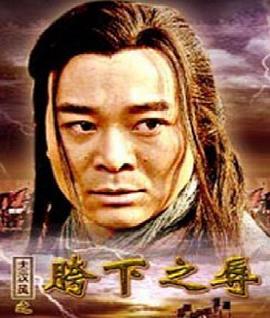
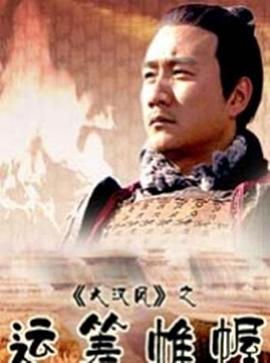
In 221 BC, Qin Shihuang annexed the six countries, ending the Spring and Autumn and Warring States periods in Chinese history that lasted for more than a hundred years, and established a unified dynasty with centralized power. In order to consolidate state power and curb popular rebellion, Qin Shihuang imposed tyranny internally and built the Great Wall externally to resist Xiongnu invasion. For a time, people all over the world were complaining and suffering unspeakably. Their families were broken up, people died, and people died of hunger everywhere. In order to resist the tyrannical rule of Qin Shihuang, the descendants of the Six Kingdoms who wanted to restore the country gathered momentum in the old territories. At this time, construction was going on in Xianyang, where Qin Shi Huang established his capital, and the Great Wall to resist the Xiongnu was extending forward day by day on the bones of millions of laborers. Liu Ji, who came from Peixian County, was like all laborers in ragged labor, with no clothes to cover his body and no food to eat. But seeing Qin Shihuang's mighty patrol team from a distance, Liu Ji and Xiang Ji of Wuzhong expressed the same emotion: This is what a man should be, and one day I will replace him. Like Xiang Ji who built the Great Wall in Xianyang and practiced martial arts in Wuzhong, there was also Zhang Liang, a Confucian scholar who was proficient in the art of war, who was determined to eradicate the tyranny of Qin Shihuang. After Qin Shihuang failed to assassinate Qin Shihuang with Big Hammer on his way to patrol, Zhang Liang came here because of his reputation. He was kindly retained by Xiang Liang and became his nephew Xiang Ji's art of war teacher. At this time, Xiang Liang relied on his nephew Xiang Ji's prowess to conquer the enemy.
Public network detected during work hours. Use Tongbao VPN for stable access to ChatGPT / Claude / Notion / Slack — keep your cross-border workflow uninterrupted.