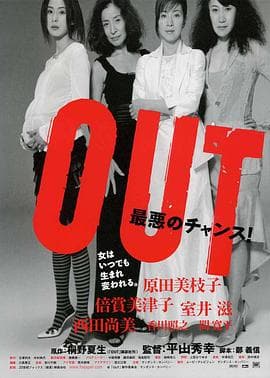
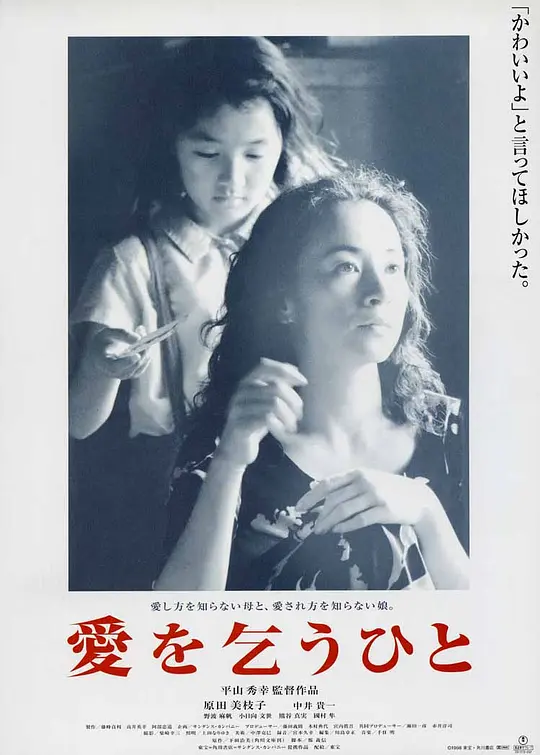
It tells the story of four women who killed their husbands and cut them into pieces. The four heroines of the film are all female workers in bento factories. They have different personalities but represent modern Japanese women: Masako, who once worked in a bank, is good at housekeeping and financial management. However, as the head of the family, she cannot communicate with her long-term unemployed husband and rebellious son. , has lived in depression and loneliness for a long time; the widowed Azuma has been working hard to serve her paralyzed mother-in-law for a long time; the pregnant Yayoi did not receive care, but was beaten by her husband who was addicted to gambling; the vain Kuniko was in debt just to exchange for material enjoyment. The first three women all have the traditional virtues of Japanese women, such as kindness, strength, and even some submissiveness; Kuniko is the product of the conflict between tradition and modern civilization. She cannot escape the plight of Japanese women's low social status, and cannot independently establish a foothold in society. It is a pity that neither the traditional virtues nor the transformed new generation can obtain it. The respect of men and society, Kirino Natsuki's delicate brushstrokes are brought into full play in front of Hideyuki Hirayama's camera. If Yayoi's murder of her husband is a struggle for tenacious survival, then the subsequent collective dismemberment incident is a silent struggle, "just like making bento in a factory." The repression suffered by the four heroines has been vented.
Boost tomorrow's productivity tonight. Tongbao VPN delivers fast, reliable access to global AI tools and office platforms. Sign up for 200MB free.


 0
0 0
0 0
0 0
0 0
0 0
0 0
0