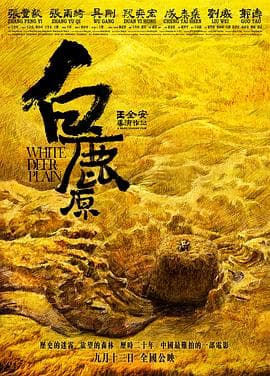
Watch Bai Lu Yuan || Times changed, the Qing Dynasty fell and the Republic of China was established. Bai Xiaowen (played by Cheng Taishen), the son of the current patriarch Bai Jiaxuan (played by Zhang Fengyi), Lu Zhaopeng (played by Guo Tao), the son of Xiangyue Lu Zilin (played by Wu Gang), and Heiwa (played by Duan Yihong), the son of Bai's boss Lu San, are brothers and sisters, and they all go their separate ways as adults. Hei Wa's affair with Tian Xiao'e (played by Zhang Yuqi), a young girl from the Guoju family in Weibei, was exposed. Tian Xiao'e was also excluded from the ancestral hall by the patriarch, so the two moved to a Manpo cave dwelling to live their lives. Lu Zhaopeng, who joined the Communist Party, brought back the revolutionary wave from the city, and Hei Wa became the backbone. After the split between the Kuomintang and the Communist Party, the brothers were forced to flee. Lu Zilin took the opportunity to occupy Tian Xiao'e, who was left alone, and designed to use her to frame the next patriarch Bai Xiaowen, causing an uproar within the clan... In the changing current situation, Bailu Village, known as "benevolence and righteousness", is constantly disputed, and the ancient land is facing earth-shaking changes. This film is adapted from Mr. Chen Zhongshi's 4th Mao Dun Literature Award work "White Deer Plain". The original work spans half a century, and the film captures the turbulent changes from 1912 to 1938. The original Qin Opera performance and the vast wheat fields are intoxicating. Online
Watch Bai Lu Yuan || Times changed, the Qing Dynasty fell and the Republic of China was established. Bai Xiaowen (played by Cheng Taishen), the son of the current patriarch Bai Jiaxuan (played by Zhang Fengyi), Lu Zhaopeng (played by Guo Tao), the son of Xiangyue Lu Zilin (played by Wu Gang), and Heiwa (played by Duan Yihong), the son of Bai's boss Lu San, are brothers and sisters, and they all go their separate ways as adults. Hei Wa's affair with Tian Xiao'e (played by Zhang Yuqi), a young girl from the Guoju family in Weibei, was exposed. Tian Xiao'e was also excluded from the ancestral hall by the patriarch, so the two moved to a Manpo cave dwelling to live their lives. Lu Zhaopeng, who joined the Communist Party, brought back the revolutionary wave from the city, and Hei Wa became the backbone. After the split between the Kuomintang and the Communist Party, the brothers were forced to flee. Lu Zilin took the opportunity to occupy Tian Xiao'e, who was left alone, and designed to use her to frame the next patriarch Bai Xiaowen, causing an uproar within the clan... In the changing current situation, Bailu Village, known as "benevolence and righteousness", is constantly disputed, and the ancient land is facing earth-shaking changes. This film is adapted from Mr. Chen Zhongshi's 4th Mao Dun Literature Award work "White Deer Plain". The original work spans half a century, and the film captures the turbulent changes from 1912 to 1938. The original Qin Opera performance and the vast wheat fields are intoxicating. in HD Online
Watch Bai Lu Yuan || Times changed, the Qing Dynasty fell and the Republic of China was established. Bai Xiaowen (played by Cheng Taishen), the son of the current patriarch Bai Jiaxuan (played by Zhang Fengyi), Lu Zhaopeng (played by Guo Tao), the son of Xiangyue Lu Zilin (played by Wu Gang), and Heiwa (played by Duan Yihong), the son of Bai's boss Lu San, are brothers and sisters, and they all go their separate ways as adults. Hei Wa's affair with Tian Xiao'e (played by Zhang Yuqi), a young girl from the Guoju family in Weibei, was exposed. Tian Xiao'e was also excluded from the ancestral hall by the patriarch, so the two moved to a Manpo cave dwelling to live their lives. Lu Zhaopeng, who joined the Communist Party, brought back the revolutionary wave from the city, and Hei Wa became the backbone. After the split between the Kuomintang and the Communist Party, the brothers were forced to flee. Lu Zilin took the opportunity to occupy Tian Xiao'e, who was left alone, and designed to use her to frame the next patriarch Bai Xiaowen, causing an uproar within the clan... In the changing current situation, Bailu Village, known as "benevolence and righteousness", is constantly disputed, and the ancient land is facing earth-shaking changes. This film is adapted from Mr. Chen Zhongshi's 4th Mao Dun Literature Award work "White Deer Plain". The original work spans half a century, and the film captures the turbulent changes from 1912 to 1938. The original Qin Opera performance and the vast wheat fields are intoxicating. Free
剧情片
大陆
2012
 0
0 0
0 0
0