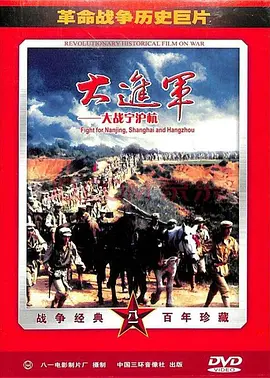
In April 1949, after the three major battles of Liaoshen, Huaihai, and Pingjin, the balance of military power between the Kuomintang and the Communist Party changed fundamentally. In accordance with the orders of Chairman Mao Zedong and Commander-in-Chief Zhu De to "march across the country," the People's Liberation Army launched a large-scale strategic offensive into the vast areas still controlled by the Kuomintang authorities. It first targeted the Beijing (Beijing) and Shanghai-Hangzhou areas where the Kuomintang was heavily entrenched. On April 20, 1949, one million of our troops were divided into three groups: the central, eastern and western groups to launch a cross-river campaign. The thousands of miles of Yangtze River defense line that the Kuomintang had painstakingly managed collapsed in the face of the overwhelming offensive of the People's Liberation Army. Taking advantage of the victory, the People's Liberation Army moved south, then captured Nanjing, cut off the Zhejiang-Jiangxi line, occupied Hangzhou, and pushed directly towards Shanghai. In order to protect the lives and property of Shanghai people and urban buildings, the People's Liberation Army finally liberated Shanghai, China's largest city, on May 27 after careful deployment and great sacrifices.
Public network detected during work hours. Use Tongbao VPN for stable access to ChatGPT / Claude / Notion / Slack — keep your cross-border workflow uninterrupted.